

TAKEAWAYS
- Consider the whole space.
- Lighting matters.
- Think beyond white.
- Choose a color you’ll love.
Choosing a cabinet color is one of the biggest design decisions you’ll make when planning a kitchen. Cabinets take up a significant amount of visual space, so the color you choose can influence everything from how large the kitchen feels to how your countertops, backsplash, flooring, and hardware look together.
With so many options available, from classic white and warm wood tones to bold greens, deep blues, and dramatic black, choosing the right cabinet color can feel overwhelming.
The good news? There isn’t one “right” cabinet color for every kitchen. The best choice depends on your home’s style, the amount of natural light, the size of your space, and how you want your kitchen to feel.
Here are some of the most important things to consider before choosing your kitchen cabinet color.
Start With Your Kitchen’s Overall Style
Before choosing a color, think about the overall look you’re trying to create.
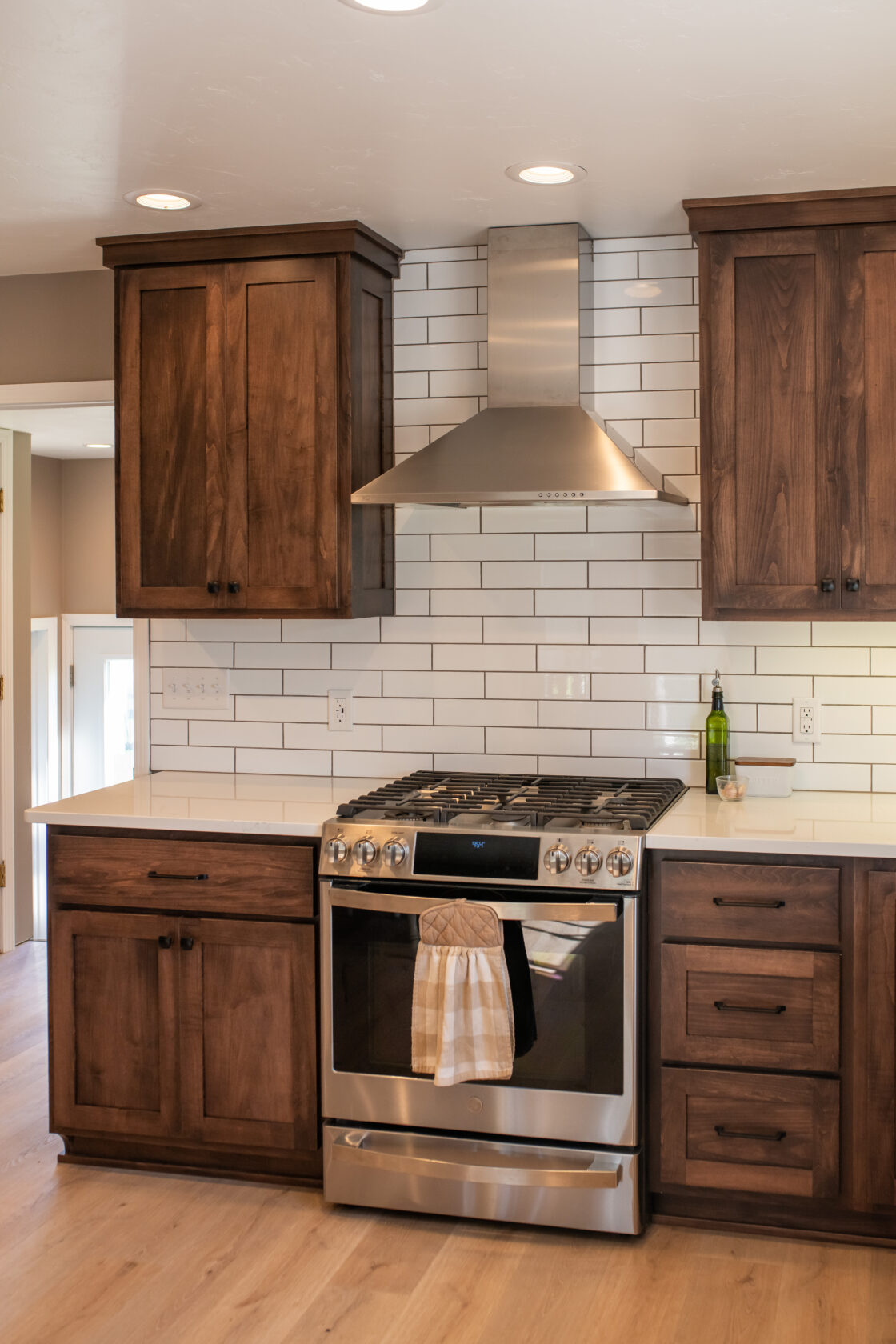
A traditional kitchen may lend itself to classic white, cream, or warm stained wood cabinets. A contemporary kitchen might look best with a sleek painted finish, natural wood, or a combination of colors. If you love a more dramatic or sophisticated look, darker cabinets can create a striking focal point.
Your cabinet color should feel intentional within the overall design rather than being chosen in isolation.
Consider the style of your:
- Countertops
- Backsplash
- Flooring
- Lighting
- Hardware
- Appliances
- Walls and trim
When these elements work together, the kitchen feels cohesive rather than like a collection of individual finishes.
Consider How Much Natural Light Your Kitchen Gets
Lighting can dramatically change how a cabinet color looks.
A color that feels warm and inviting in a showroom may look completely different in your home depending on the direction of your windows and the amount of natural light your kitchen receives.
Kitchens With Lots of Natural Light
A kitchen with plenty of windows can handle a wider range of colors. Darker cabinets can create contrast without making the room feel too closed in, while lighter colors can enhance an already bright space.
Kitchens With Limited Natural Light
If your kitchen doesn’t get much natural light, lighter cabinet colors can help the space feel more open and airy. White, cream, light gray, and lighter wood tones can reflect available light and prevent the room from feeling too dark.
It’s also important to look at cabinet samples in your actual kitchen throughout the day. Morning light, afternoon light, and artificial lighting can all affect how a color appears.
Think About the Size of Your Kitchen
Cabinet color can influence how large or small a kitchen feels.
Lighter colors generally make a space feel more open, which can be especially helpful in a smaller kitchen. White, soft neutrals, and lighter wood tones can create a bright, spacious feeling.
That doesn’t mean small kitchens need light cabinets.
Dark cabinetry can work beautifully in a smaller space when balanced with lighter countertops, walls, flooring, or plenty of lighting. The key is creating enough contrast and visual balance.
In a large kitchen, you have more room to experiment with deeper colors, contrasting finishes, or multiple cabinet colors.
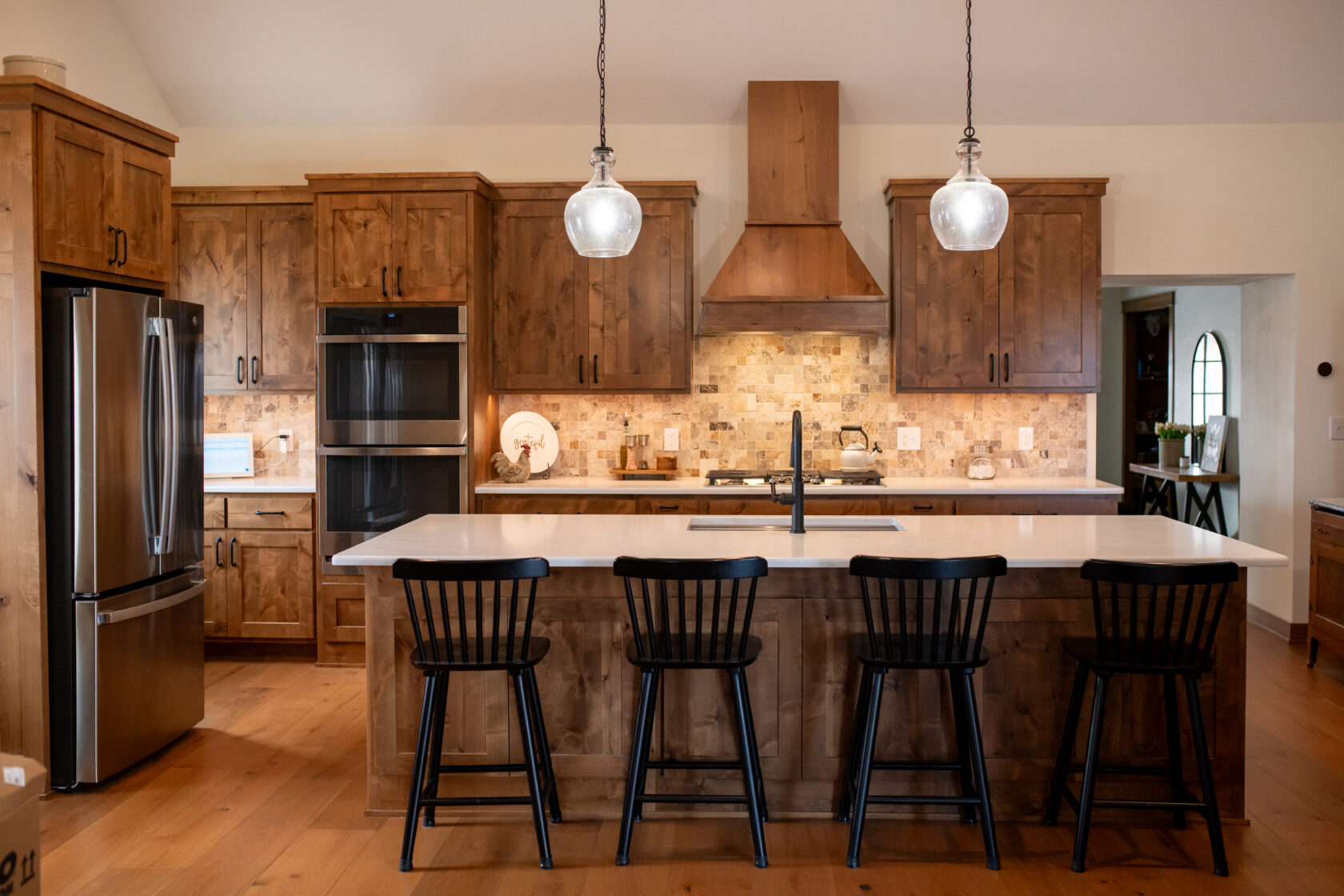
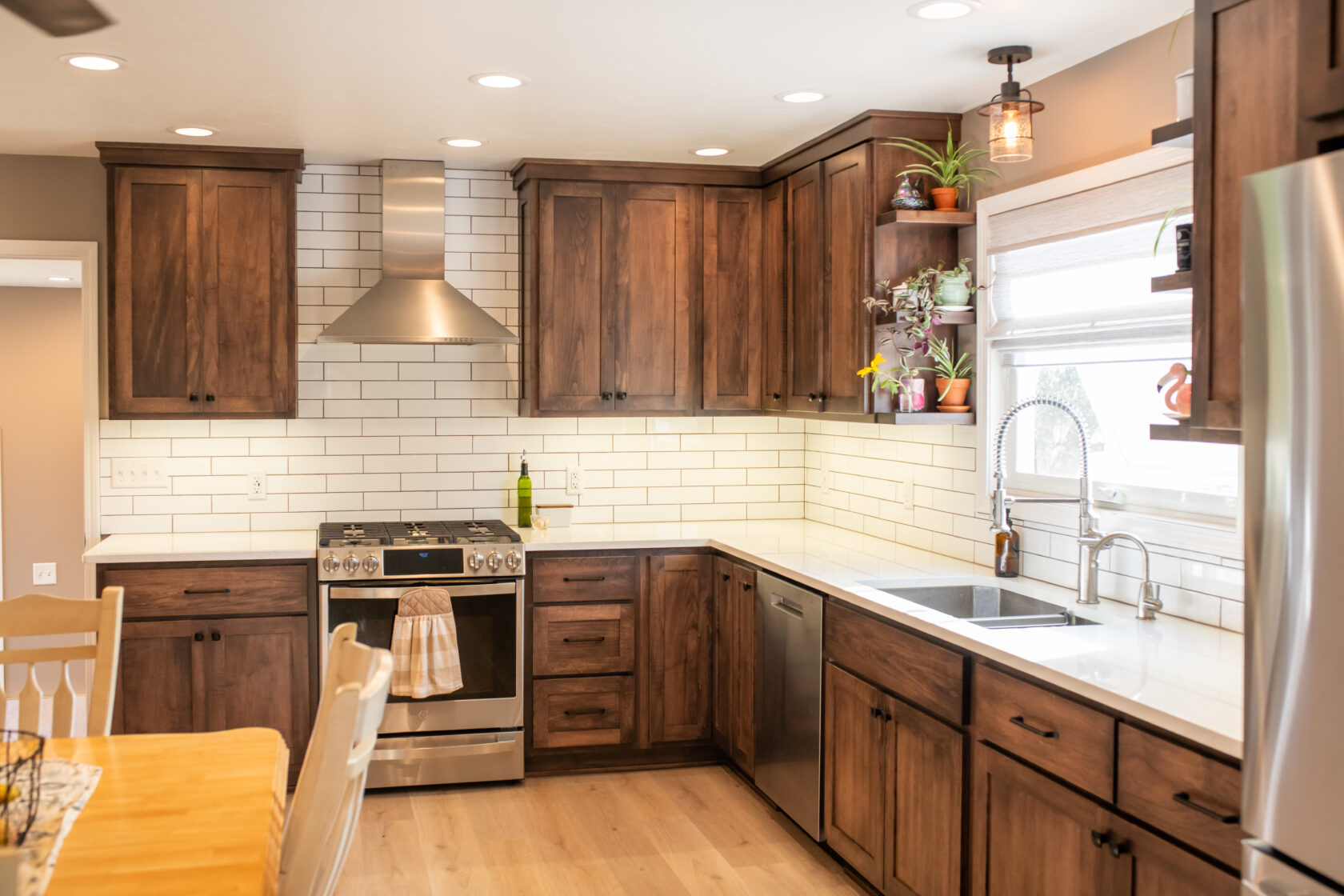
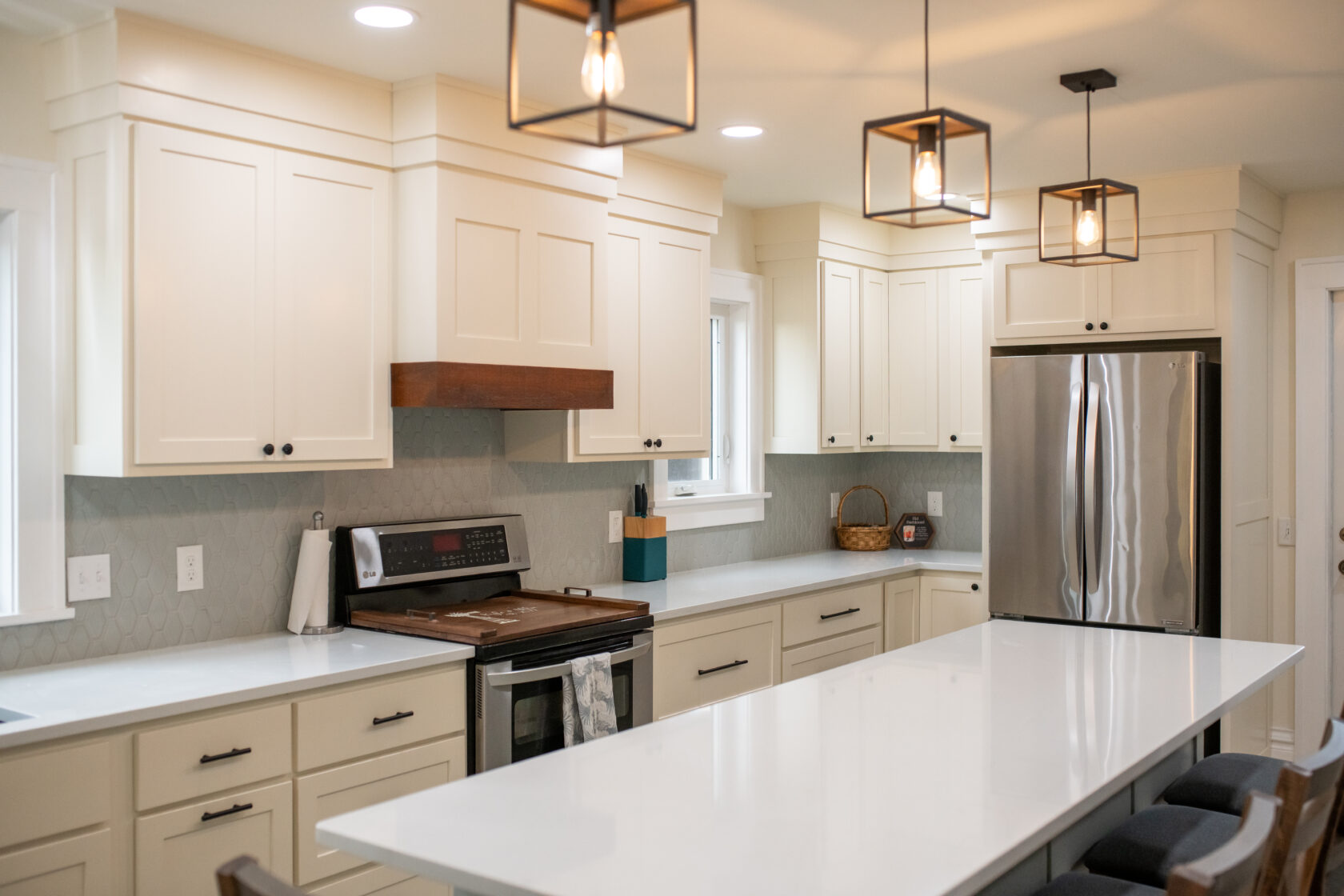
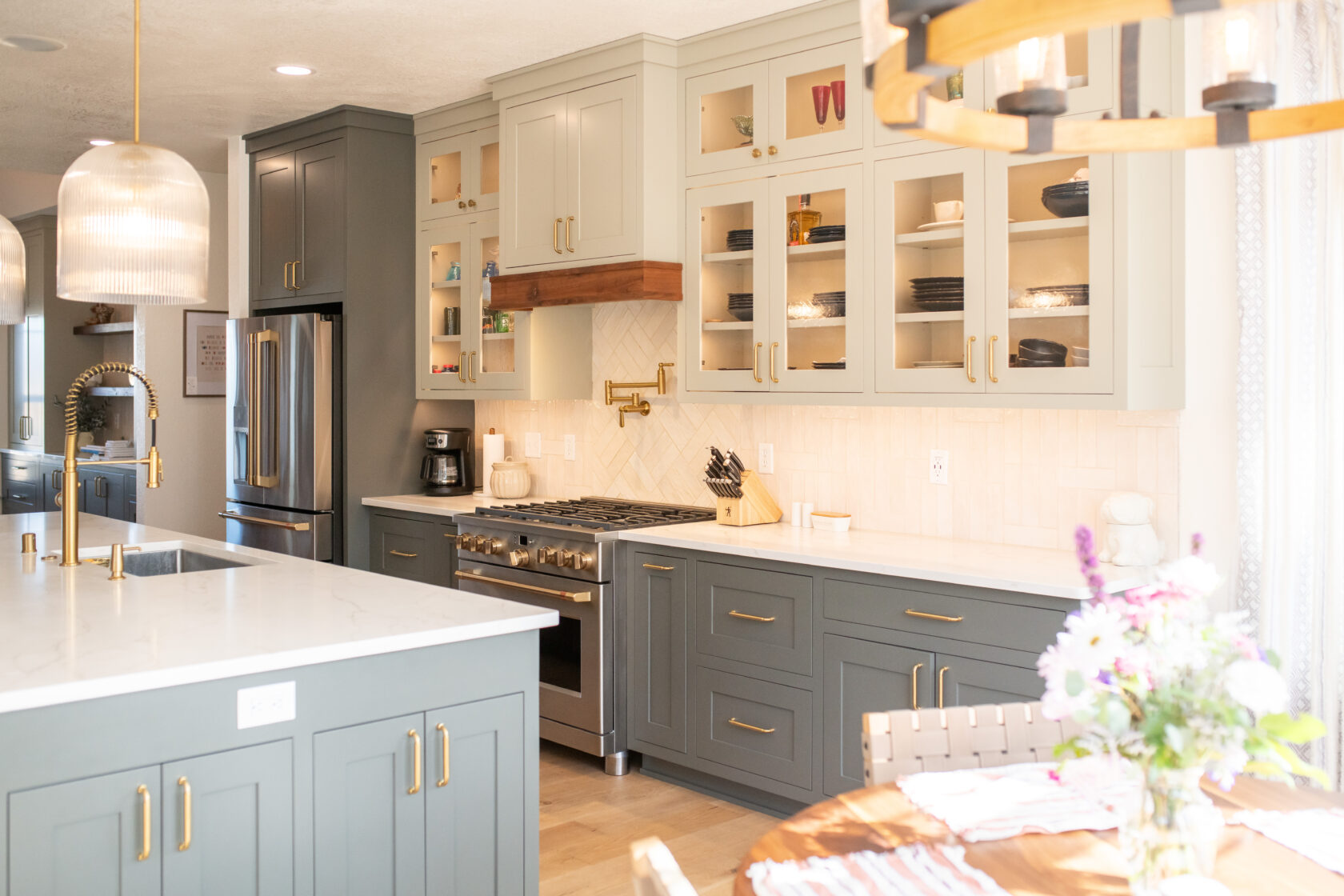



White Cabinets: Classic and Versatile
There’s a reason white kitchen cabinets have remained popular for so long. They’re bright, versatile, and work with almost any design style.
White cabinets can make a kitchen feel:
- Bright and open
- Clean and timeless
- Traditional or contemporary
- Easy to personalize with hardware and accessories
But white doesn’t have to mean stark or cold. Warm whites and creamy finishes can create a softer, more inviting kitchen, particularly when paired with natural wood, warm countertops, or brass hardware.
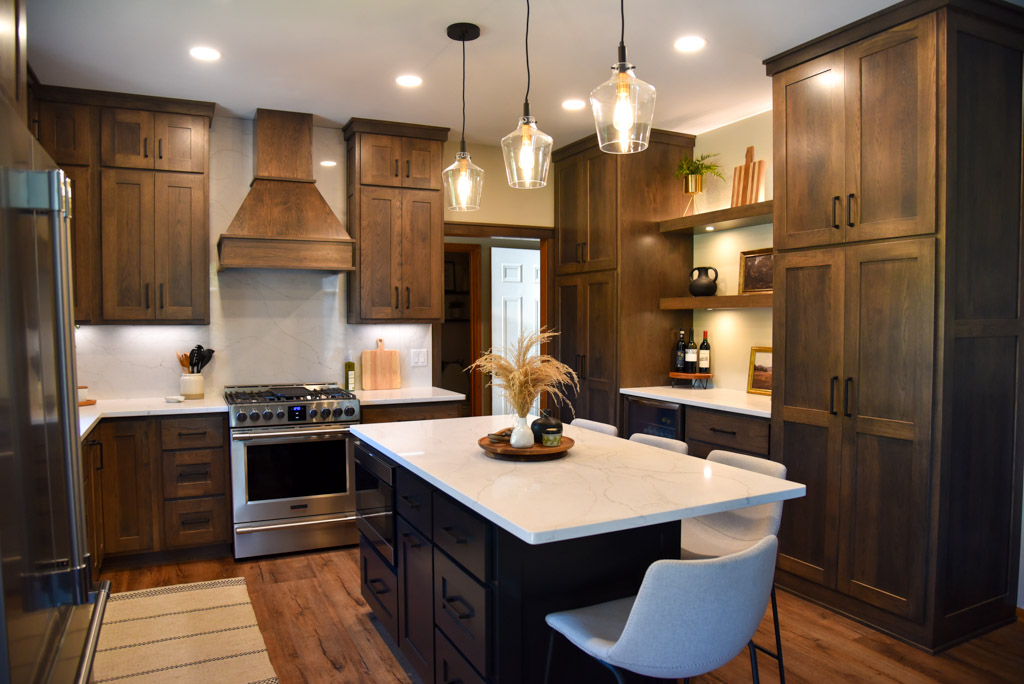
Natural Wood: Warm and Timeless
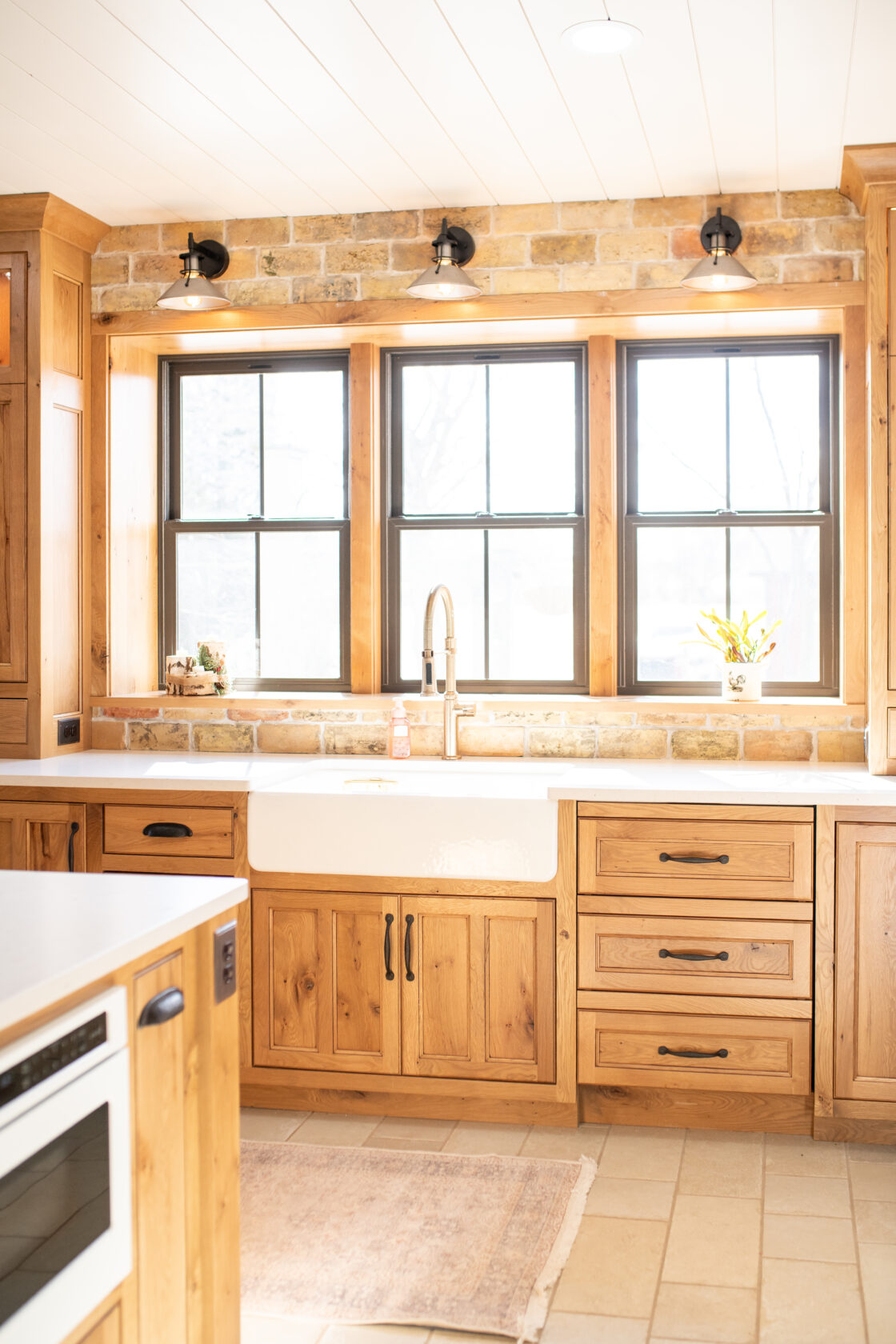
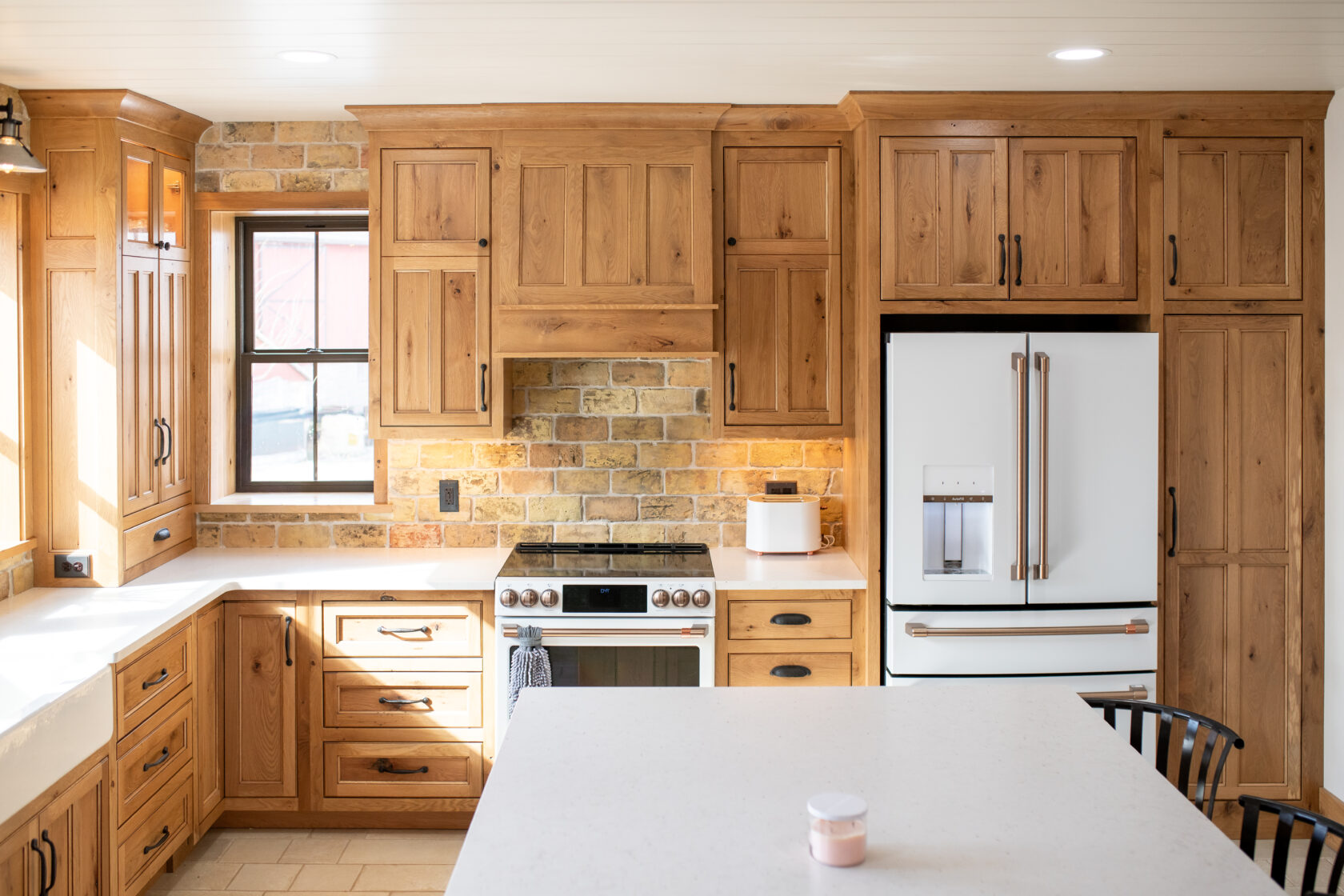
Natural and stained wood cabinets bring warmth and character to a kitchen.
Depending on the wood species, stain, and finish, wood cabinetry can range from light and contemporary to rich and traditional. Natural wood also pairs well with other materials, including stone countertops, tile backsplashes, and metal hardware.
Wood tones are particularly appealing if you want your kitchen to feel warm, comfortable, and connected to the rest of your home.
And today’s wood kitchens don’t have to look like the kitchens of decades past. Modern layouts, simple door styles, and carefully selected finishes can give wood cabinetry a fresh, contemporary appearance.

Don’t Be Afraid of Color
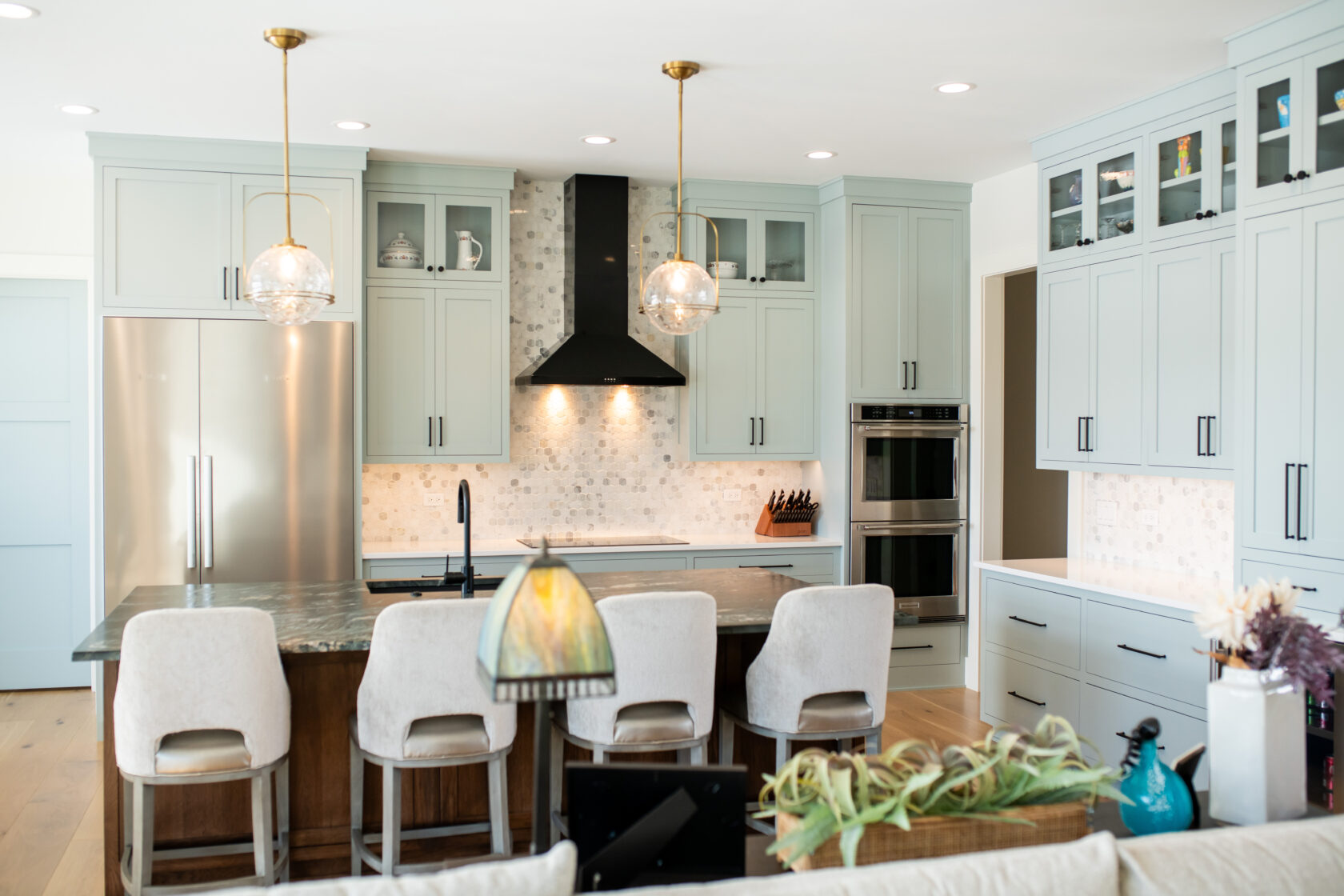
White and wood may be timeless choices, but painted cabinets can add personality to your kitchen.
Soft greens, muted blues, warm taupes, deep navy, and other colors can create a distinctive look without making the kitchen feel overly trendy.
The key is choosing a color that works with the other permanent elements in your kitchen.
If you love a bold cabinet color, consider whether you’ll still enjoy seeing it every day several years from now. A color doesn’t have to be completely neutral to be timeless. Sometimes a carefully chosen color becomes one of the most memorable parts of the kitchen.

Dark Cabinets Can Make a Statement
Black, charcoal, espresso, and other dark cabinet finishes can create a sophisticated and dramatic kitchen.
Dark cabinetry works particularly well when balanced with lighter elements such as:
- Light countertops
- Bright backsplashes
- Natural wood accents
- Plenty of lighting
- Light walls or flooring
In a larger kitchen, dark cabinets can create depth and make the cabinetry feel substantial. In a smaller kitchen, they can still work when the rest of the design provides enough contrast and light.
Consider a Two-Tone Kitchen
You don’t necessarily have to choose just one cabinet color.
Two-tone kitchens have become a popular way to add visual interest while keeping the overall design cohesive.
A common approach is using one finish for the perimeter cabinets and another for the island. For example, white perimeter cabinets paired with a stained wood island can add warmth and contrast without overwhelming the room.
Other combinations might include:
- Light cabinets with a dark island
- Painted perimeter cabinets with natural wood accents
- Two complementary painted colors
- A neutral cabinet color paired with a bolder island
Using two finishes can also help visually define different areas of a larger kitchen.
Coordinate Cabinets With Your Countertops and Backsplash
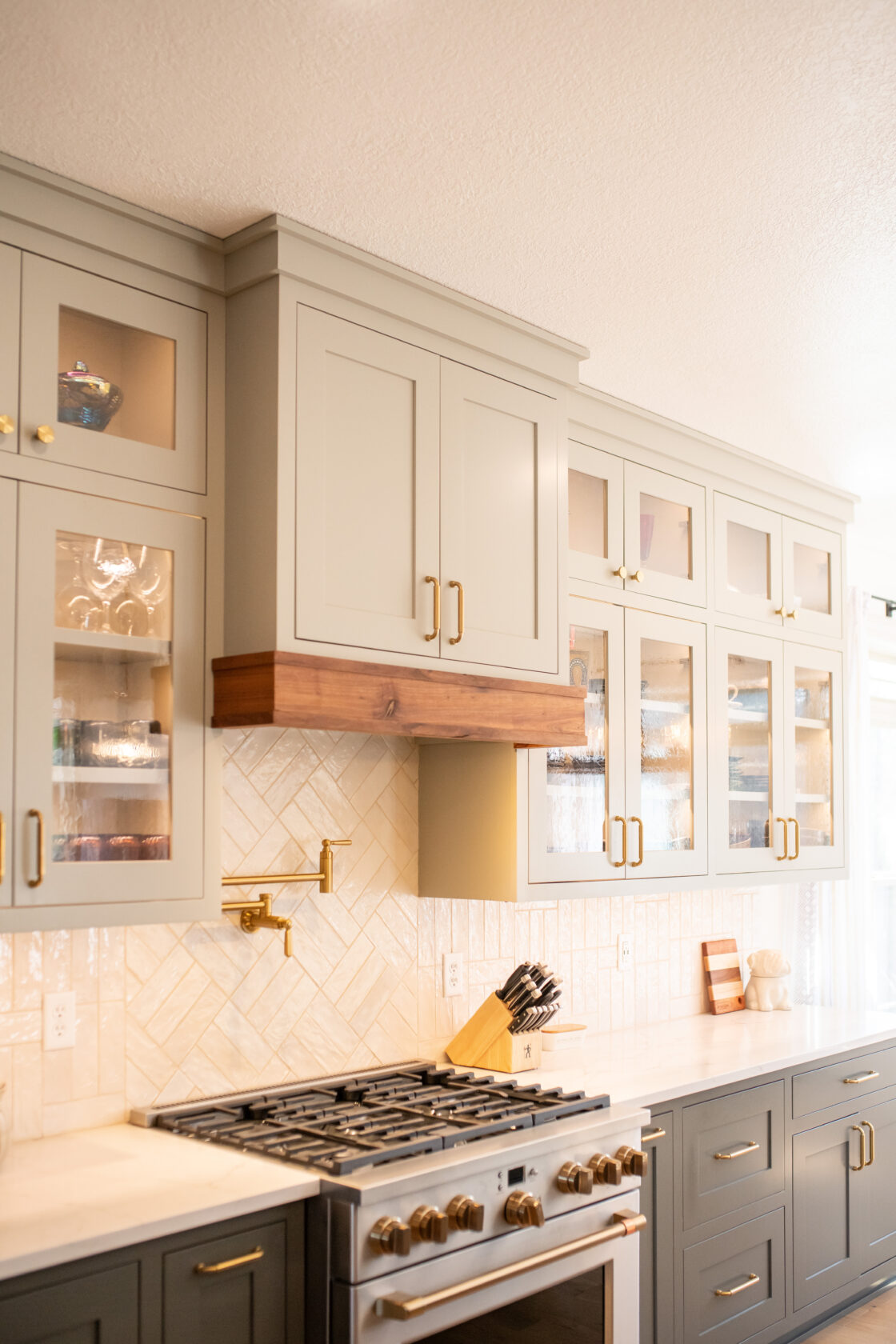
Your cabinets don’t exist on their own. They need to work with the other major finishes in the room.
If your countertop has a lot of movement or veining, a simpler cabinet color may help keep the kitchen from feeling visually busy.
On the other hand, simple countertops and backsplashes can give you more freedom to introduce color or character through the cabinetry.
Before committing to a cabinet color, look at samples of your cabinet, countertop, backsplash, and flooring together. Seeing the finishes side by side can reveal combinations that look completely different from what you imagined.
Choose Timelessness Over Trends
Kitchen trends can be fun, but cabinets are a significant investment. You don’t necessarily want to choose a color simply because it’s popular right now.
That doesn’t mean you need to play it safe.
A timeless kitchen is less about choosing a neutral color and more about choosing finishes that you genuinely like and that work with the architecture and style of your home.
If you love current trends, consider incorporating them in ways that are easier to change later. Hardware, lighting, paint, bar stools, and accessories can all introduce personality without requiring you to replace your cabinetry.
Think About How You Want Your Kitchen to Feel
Color isn’t just about appearance. It can influence the mood of the entire room.
Ask yourself what you want your kitchen to feel like.
Bright and airy? Consider whites, creams, and lighter finishes.
Warm and inviting? Look at natural wood and warm neutrals.
Bold and sophisticated? Consider dark cabinetry or a dramatic island.
Fresh and distinctive? Explore muted greens, blues, or other painted finishes.
Classic and versatile? White, soft neutrals, and timeless wood tones are excellent places to start.
The best cabinet color is one that supports both the look and the feeling you want from your kitchen.
Don’t Choose Your Cabinet Color From a Tiny Sample
One of the easiest mistakes to make is choosing a cabinet color from a small sample without considering how it will look across an entire kitchen.
A finish can appear very different when it’s covering a large wall of cabinetry compared with a small sample door.
Whenever possible, view a larger sample in the actual space and look at it under both natural and artificial lighting.
Pay attention to how the color changes throughout the day and how it interacts with your existing or planned finishes.
Your Kitchen Should Look Like You
There are plenty of beautiful cabinet colors to choose from, but the goal isn’t to create a kitchen that looks like everyone else’s.
The right cabinet color should complement your home, work with the other materials in the space, and reflect your personal style.
Whether you’re drawn to classic white, warm natural wood, bold color, dramatic dark cabinetry, or a combination of finishes, thoughtful cabinet selection can completely transform the look and feel of your kitchen.
At Best Choice Cabinets, custom cabinetry gives you the opportunity to choose finishes and details that work specifically for your space and your lifestyle. When you’re ready to explore your options, start with the way you want your kitchen to look, feel, and function, then build your cabinet choices from there.
Frequently Asked Questions

White remains a popular choice because it is versatile and works with a wide range of kitchen styles. Natural wood tones and painted colors such as green, blue, and neutral shades are also popular choices. The best color depends on your home’s design, lighting, and personal preferences. everyday cooking, cleaning, and entertaining easier.
They don’t have to be either. The most important consideration is creating enough contrast and balance between the cabinets and countertops. For example, dark cabinets can pair beautifully with a lighter countertop, while light cabinets can work well with both light and darker surfaces.
Lighter cabinet colors such as white, cream, light gray, and lighter wood tones can help a small kitchen feel more open and spacious. However, dark cabinets can also work in smaller kitchens when balanced with good lighting and lighter surrounding finishes.
Yes. Natural and stained wood cabinets remain a popular choice because they add warmth and texture to a kitchen. Modern door styles and contemporary layouts can give wood cabinetry a fresh look that works well in today’s kitchens. choice depends on ceiling height, architecture, and the overall design.
You don’t necessarily have to choose one or the other. A cabinet color can be current while still working well for years to come. Consider choosing a cabinet finish you genuinely enjoy and using easier-to-change elements such as hardware, lighting, paint, and accessories to incorporate trends.end. Luxury isn’t about adding the most expensive features. It’s about making every element work together.
Have More Questions? Visit our FAQ’s page.
Stay up-to-date with all things cabinets! Follow us on Facebook and Instagram!