
TAKEAWAYS
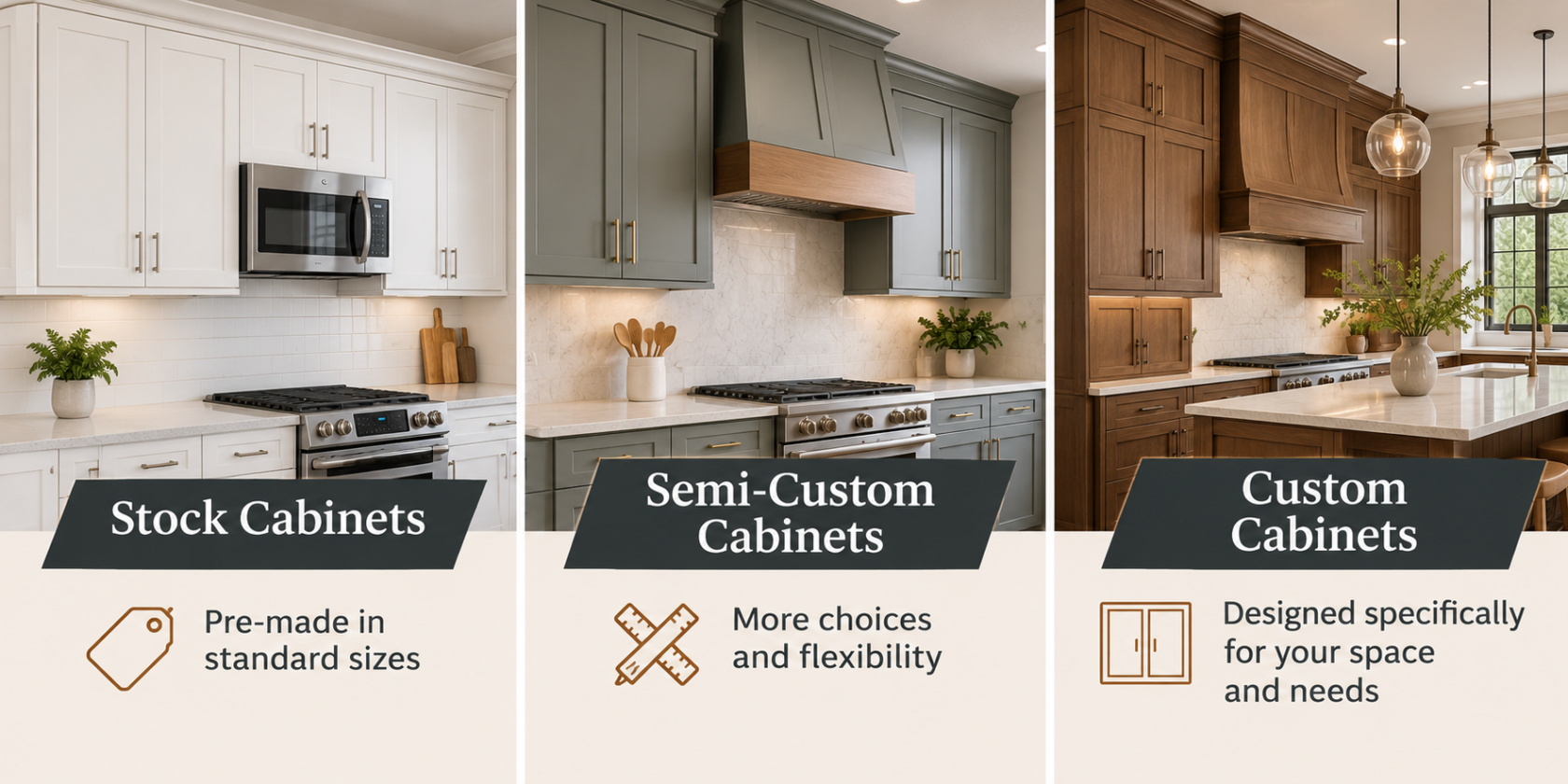
- Stock cabinets: Standard sizes and budget-friendly.
- Semi-custom cabinets: More choices and flexibility.
- Custom cabinets: Designed specifically for your space and needs.
- Choose what fits: Consider your budget, layout, and design goals.
When planning a kitchen remodel, one of the biggest decisions you’ll make is choosing your cabinetry. Cabinets influence the overall appearance of your kitchen, how much storage you have, and how well the space functions for your everyday needs.
But if you’ve started researching kitchen cabinets, you’ve probably come across three terms: custom, semi-custom, and stock cabinets. While they may look similar in photos, there are some important differences in how they’re made, how they’re sized, and how much flexibility you have when designing your kitchen.
So, what’s the difference between custom, semi-custom, and stock cabinets? And which option is right for your home?
Let’s break it down.
What Are Stock Cabinets?
Stock cabinets are pre-manufactured cabinets produced in standard sizes, styles, and finishes. They’re typically made in large quantities and kept in inventory, making them one of the more readily available cabinet options.
Because stock cabinets are manufactured in predetermined dimensions, homeowners choose from the available sizes and configurations rather than designing cabinets specifically for their kitchen.
Benefits of Stock Cabinets
Lower upfront cost: Stock cabinets are generally the most budget-friendly option.
Faster availability: Many stock cabinets are readily available or have shorter lead times.
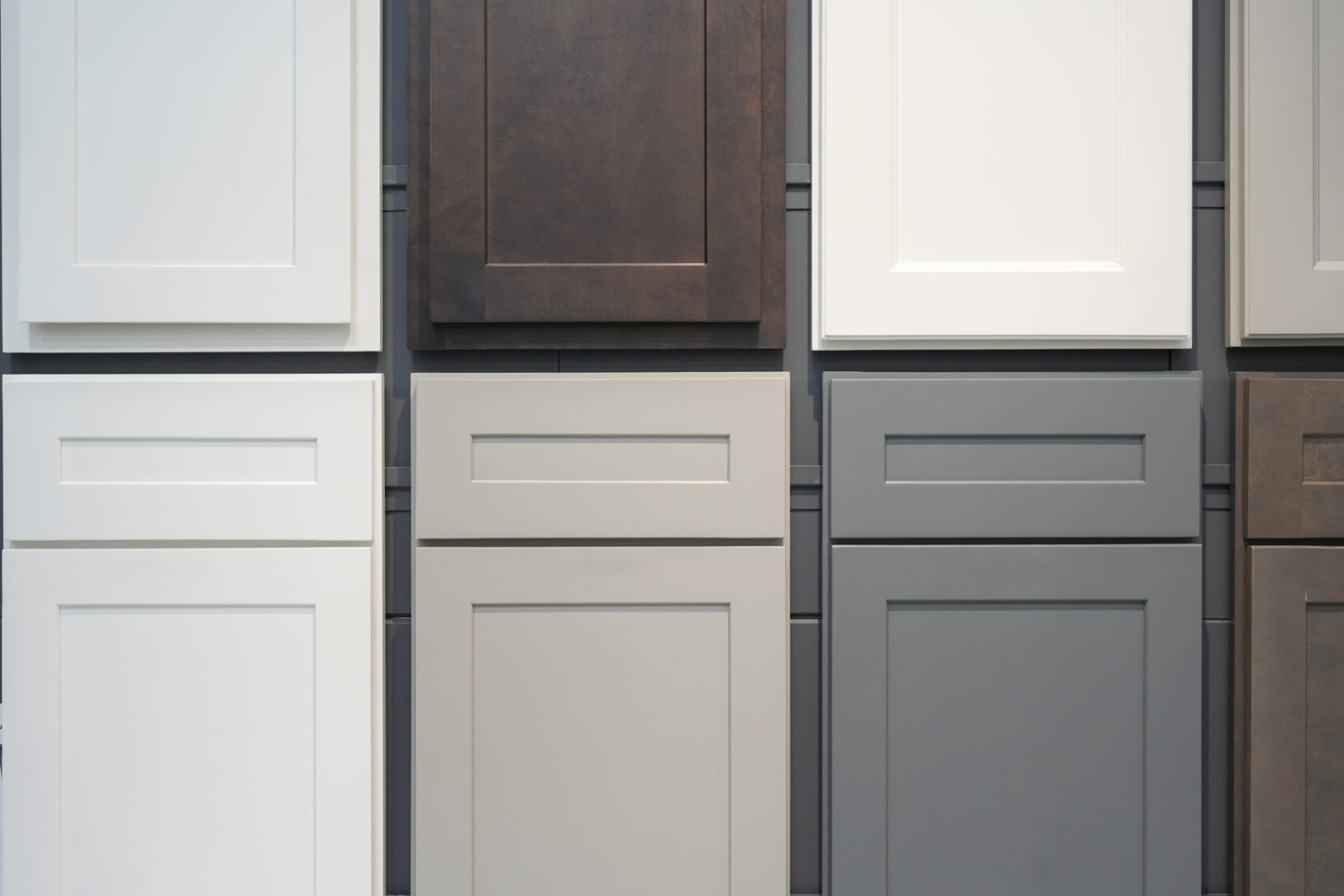
- Straightforward selection: Homeowners choose from a limited selection of standard sizes, door styles, and finishes.
Good for simple layouts: Standard cabinet dimensions can work well in kitchens with straightforward layouts.
Potential Drawbacks of Stock Cabinets
The biggest limitation of stock cabinets is flexibility. Since they’re manufactured in standard sizes, they may not fit every kitchen perfectly.
Homeowners may need filler pieces to accommodate gaps between cabinets, walls, or appliances. Storage configurations, finishes, and design details are also generally more limited.
Stock cabinets can be a practical solution for certain projects, but they may not offer the level of personalization some homeowners want.
What Are Semi-Custom Cabinets?
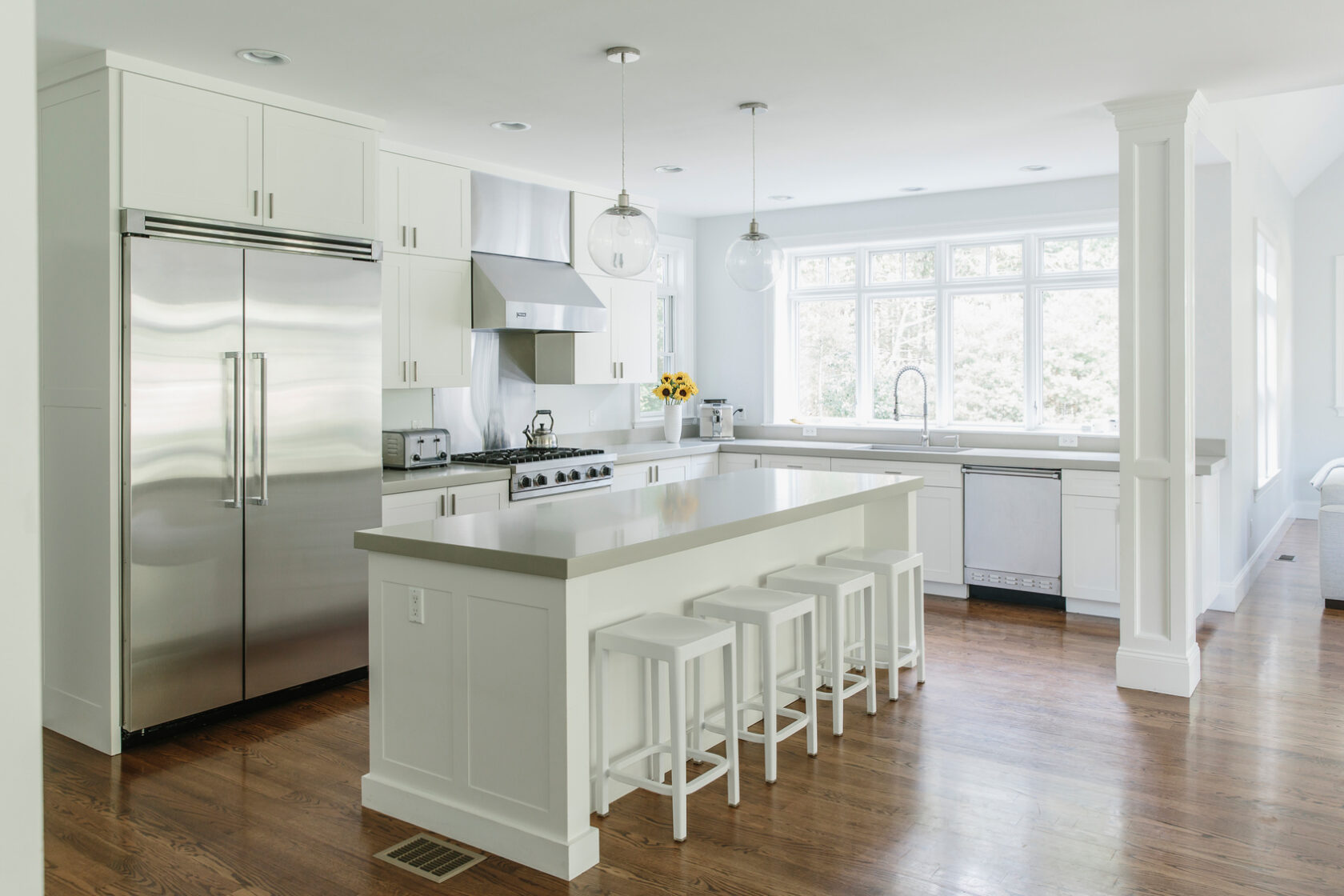
Semi-custom cabinets offer a middle ground between stock and fully custom cabinetry.
Like stock cabinets, semi-custom cabinets are built using an established product line with predetermined styles and construction options. However, they typically offer more flexibility in sizing, finishes, modifications, and features.
Depending on the manufacturer, homeowners may be able to request adjustments to cabinet dimensions, select additional door styles, or customize certain storage features.
Benefits of Semi-Custom Cabinets
More design flexibility: Additional sizes, finishes, and modifications may be available.
More personalization: Homeowners can often choose from a wider range of door styles, colors, and hardware options.
Additional storage options: Some manufacturers offer upgraded drawers, pull-outs, and organizational features.
Middle-ground pricing: Semi-custom cabinets generally cost more than stock cabinets but less than fully custom cabinetry.
Potential Drawbacks of Semi-Custom Cabinets
Although semi-custom cabinets offer more flexibility, homeowners are still working within the manufacturer’s available options.
Not every dimension, configuration, or design detail can be modified. The available choices also depend heavily on the manufacturer and product line.
For homeowners with unique kitchen layouts or very specific design goals, those limitations may become more noticeable.
What Are Custom Cabinets?
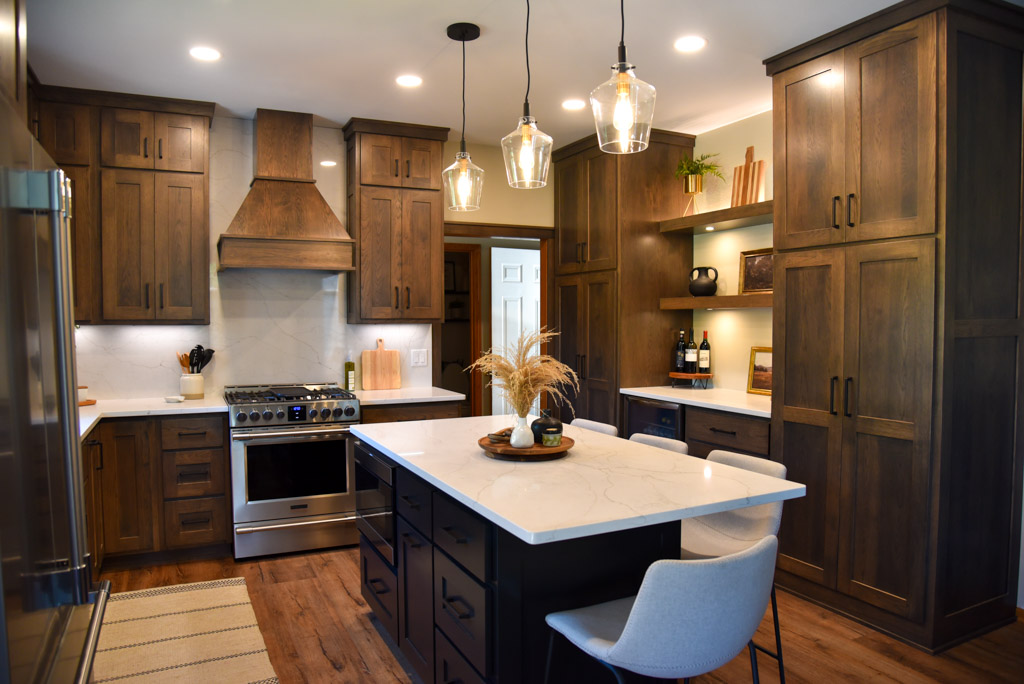
Custom cabinets are designed and built specifically for your kitchen, your space, and your preferences.
Rather than selecting from a predetermined collection of sizes and configurations, custom cabinetry allows the design to start with your kitchen’s actual dimensions, layout, and functional needs.
This gives homeowners significantly more control over how their kitchen looks and works.
Benefits of Custom Cabinets
Made for your space: Cabinets can be designed around your kitchen’s exact measurements, including unusual layouts and challenging areas.
Greater design flexibility: Choose the cabinet dimensions, styles, finishes, and details that fit your vision.
Personalized storage: Incorporate specialized drawers, pull-outs, appliance storage, and other features based on how you use your kitchen.
More cohesive design: Custom cabinetry can help eliminate awkward gaps and create a more intentional, finished appearance.
Unique design possibilities: From built-in appliances to decorative details, custom cabinets allow you to create a kitchen that feels uniquely yours.
Potential Considerations With Custom Cabinets
Custom cabinetry typically requires a larger investment and more planning than stock or semi-custom options.
Because cabinets are designed specifically for your project, the process generally involves measurements, design decisions, material selections, and production time.
However, for homeowners who want a kitchen designed around their space rather than adjusting their space around standard cabinets, that flexibility can make a significant difference.
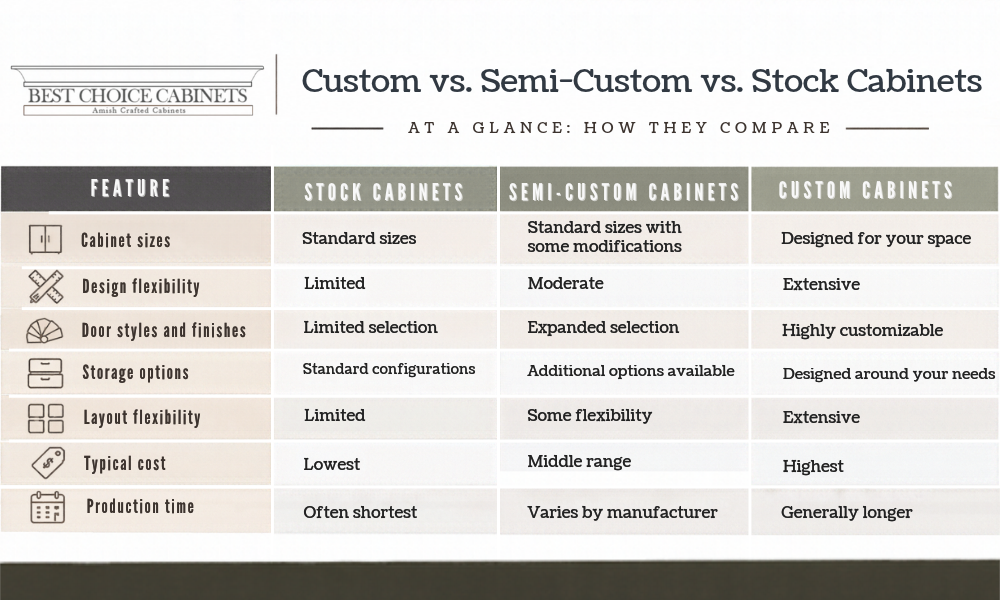
Note: Availability, pricing, construction quality, and customization options vary by manufacturer and cabinet company. These are general comparisons rather than guarantees.



How Do You Decide Which Cabinets Are Right for Your Kitchen?
The best cabinet option depends on your budget, kitchen layout, design preferences, and how much flexibility you want.
Here are a few things to consider before making your decision.
1. Start With Your Budget
Budget is often the first consideration when choosing cabinets.
Stock cabinets are typically the least expensive option, while semi-custom cabinets offer additional flexibility at a higher price. Custom cabinets generally require a larger investment because they’re designed specifically for your project.
Remember to consider more than just the initial cabinet price. Think about storage, functionality, installation, and how well the cabinets will work within your overall kitchen design.
2. Consider Your Kitchen’s Layout
Does your kitchen have standard dimensions, or does it include unusual corners, angled walls, unique ceiling heights, or other challenging areas?
Stock cabinets may work well in straightforward layouts. However, kitchens with unique dimensions can benefit from the flexibility of semi-custom or custom cabinetry.
Custom cabinets can be designed to use available space more effectively, helping reduce awkward gaps and unnecessary filler pieces.
3. Think About How You Use Your Kitchen
Your cabinets should work for the way you actually live.
Do you need deep drawers for pots and pans? A dedicated baking station? A pull-out spice rack? A hidden appliance garage? Specialized storage for small appliances?
While stock cabinets offer standard configurations, custom cabinetry allows you to incorporate storage solutions around your specific needs and routines.
4. Decide How Much Design Freedom You Want
If you’re happy choosing from a collection of standard cabinet styles and finishes, stock or semi-custom cabinets may provide everything you need.
But if you have a particular vision for your kitchen, want specific dimensions, or need unique design details, custom cabinetry gives you more control over the finished result.
5. Think Beyond Today’s Needs
A kitchen is one of the most frequently used spaces in your home. It’s worth considering how well your cabinet choices will serve you over time.
Think about storage, accessibility, functionality, and the overall design. Choosing cabinetry that works for your lifestyle can make everyday tasks easier and help you enjoy your kitchen for years to come.
Are Custom Cabinets Worth the Investment?
For many homeowners, the answer is yes, particularly when the goal is to create a kitchen that fits their space and lifestyle.
Custom cabinets offer a level of design flexibility that stock and semi-custom options may not provide. You aren’t limited to predetermined sizes, configurations, or finishes. Instead, the cabinetry can be designed around the way you want your kitchen to look and function.
That doesn’t mean custom cabinets are the right choice for every project. If you have a straightforward kitchen layout, a limited budget, or don’t need extensive customization, stock or semi-custom cabinets may be perfectly suitable.
The important thing is understanding what you’re getting with each option and choosing the cabinetry that best supports your goals.
Create a Kitchen Designed Around You
Your kitchen should work for your home, your family, and your everyday routines. The right cabinetry plays a major role in making that happen.
Whether you’re considering stock, semi-custom, or custom cabinets, understanding the differences can help you make a more confident decision.
At Best Choice Cabinets, we believe great kitchen design starts with understanding how you want your space to look and function. Custom cabinetry gives you the freedom to bring those ideas together with thoughtful details, personalized storage, and finishes that reflect your style.
If you’re ready to explore the possibilities, let’s start planning a kitchen designed around you.
Frequently Asked Questions

Stock cabinets come in predetermined sizes and styles. Semi-custom cabinets offer additional options and some modifications within a manufacturer’s product line. Custom cabinets are designed and built specifically for your kitchen, offering the greatest flexibility in dimensions, finishes, and features.
Yes, custom cabinets generally cost more than stock cabinets because they require individualized design, materials, and production. However, the final price depends on the cabinet materials, construction, finishes, features, and project size. Semi-custom cabinets typically fall somewhere in between.
Semi-custom cabinets can be a good option for homeowners who want more choices than stock cabinets provide without investing in fully custom cabinetry. They offer additional flexibility in finishes, sizes, and features, although modifications are still limited by the manufacturer’s available options.
Not necessarily. Cabinet lifespan depends on factors such as construction quality, materials, hardware, installation, and maintenance. Custom cabinetry offers greater design flexibility, but a well-made stock or semi-custom cabinet can also provide years of reliable use. It’s important to evaluate construction quality rather than assuming customization automatically means better durability.
Start by evaluating your budget, kitchen dimensions, storage needs, and design preferences. Stock cabinets may work well for straightforward layouts and tighter budgets. Semi-custom cabinets offer additional choices, while custom cabinets are ideal when you want cabinetry designed specifically around your space and lifestyle. A cabinet professional can help you compare options and determine what makes the most sense for your project.
Have More Questions? Visit our FAQ’s page.
Stay up-to-date with all things cabinets! Follow us on Facebook and Instagram!